Commercial / Industrial & Warehouse
Industrial Electrician for Warehouses & Light Industrial Spaces in Lowell, MA
Warehouses and light industrial spaces run on different electrical demands than a typical office: three-phase equipment, higher loads, and machinery that can’t afford unplanned downtime. I handle electrical work for warehouses, light manufacturing, and industrial spaces across Lowell and the Merrimack Valley. It is one of the commercial electrical services I handle end to end.
Light Industrial & Warehouse Electrical Services in Lowell, MA
This work covers warehouses, light manufacturing floors, and industrial spaces where a small business or shop needs reliable power for equipment, lighting, and distribution. That includes three-phase circuits for machinery, panel and distribution work, warehouse lighting, and troubleshooting when something on the floor isn’t working right.
Lowell’s industrial base ranges from precision machine shops running lathes and CNC-style equipment to shops with dedicated compressed air systems, spread across areas like Ayer’s City Industrial Park south of downtown and older mill buildings converted for modern manufacturing use. Each type of space comes with its own electrical demands.
To be upfront about scope: this is light industrial and small-to-mid warehouse work, sized for what a solo or two-person crew can properly oversee. Heavy industrial work, large-scale new construction, and utility-level high-voltage systems are outside what I take on, both because of the scale and because I believe in personally overseeing every job I do.
Related commercial work:
01
Three-Phase Power and Equipment Circuits
Most industrial and warehouse equipment runs on three-phase power rather than the single-phase power in a typical office or home. That includes air compressors, machine tools, and other shop equipment that needs a dedicated circuit and the right disconnect to shut it down safely for service. Precision machine shops running lathes and CNC-style equipment are common across Lowell’s industrial areas, and each machine typically needs its own properly sized circuit rather than sharing power with everything else on the floor.
A dedicated compressed air system is a good example of what this looks like in practice: the compressor needs its own circuit, sized correctly, with a disconnect installed where it’s actually needed, not just wherever the nearest outlet happens to be.
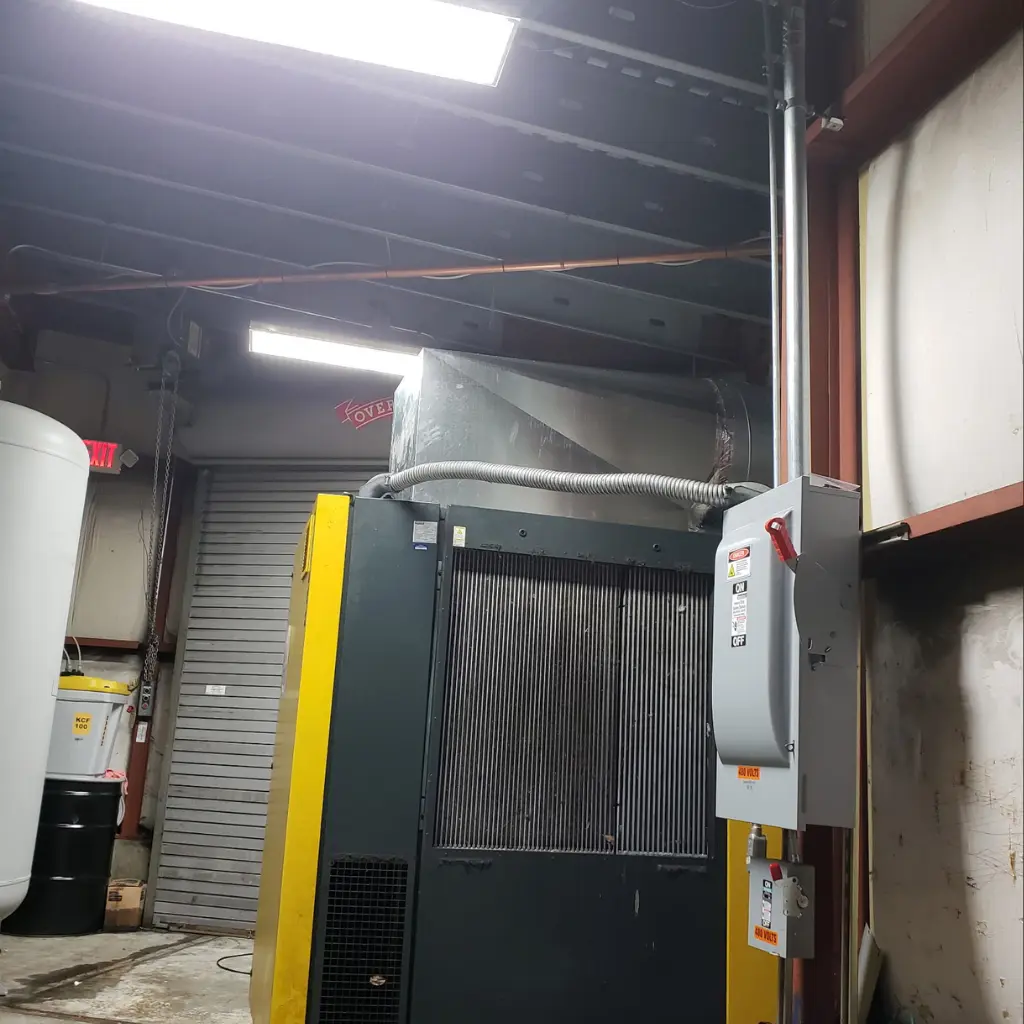
Three-phase
each machine on its own properly sized circuit, with the disconnect where service actually happens
02
Machine & Equipment Wiring
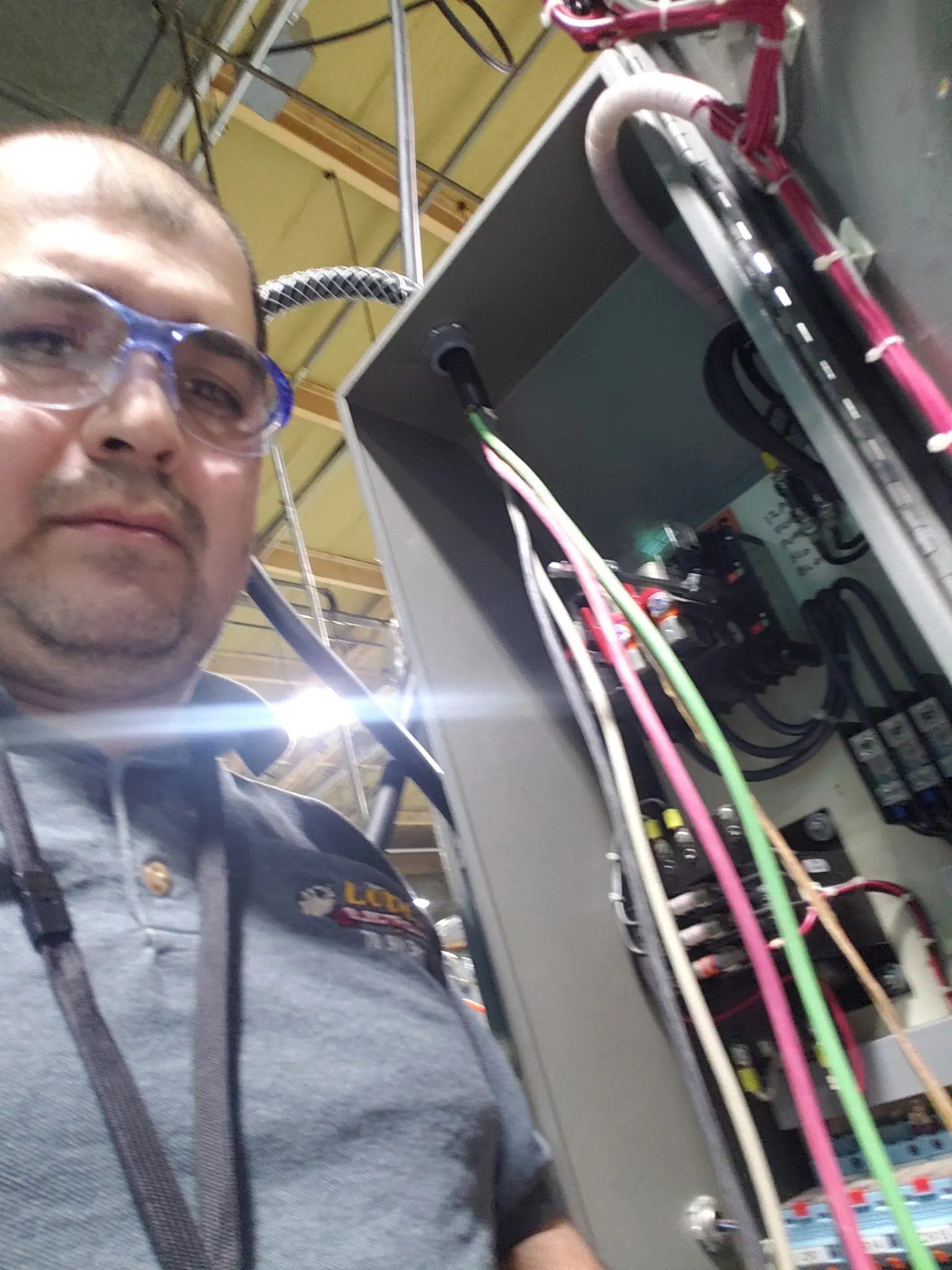
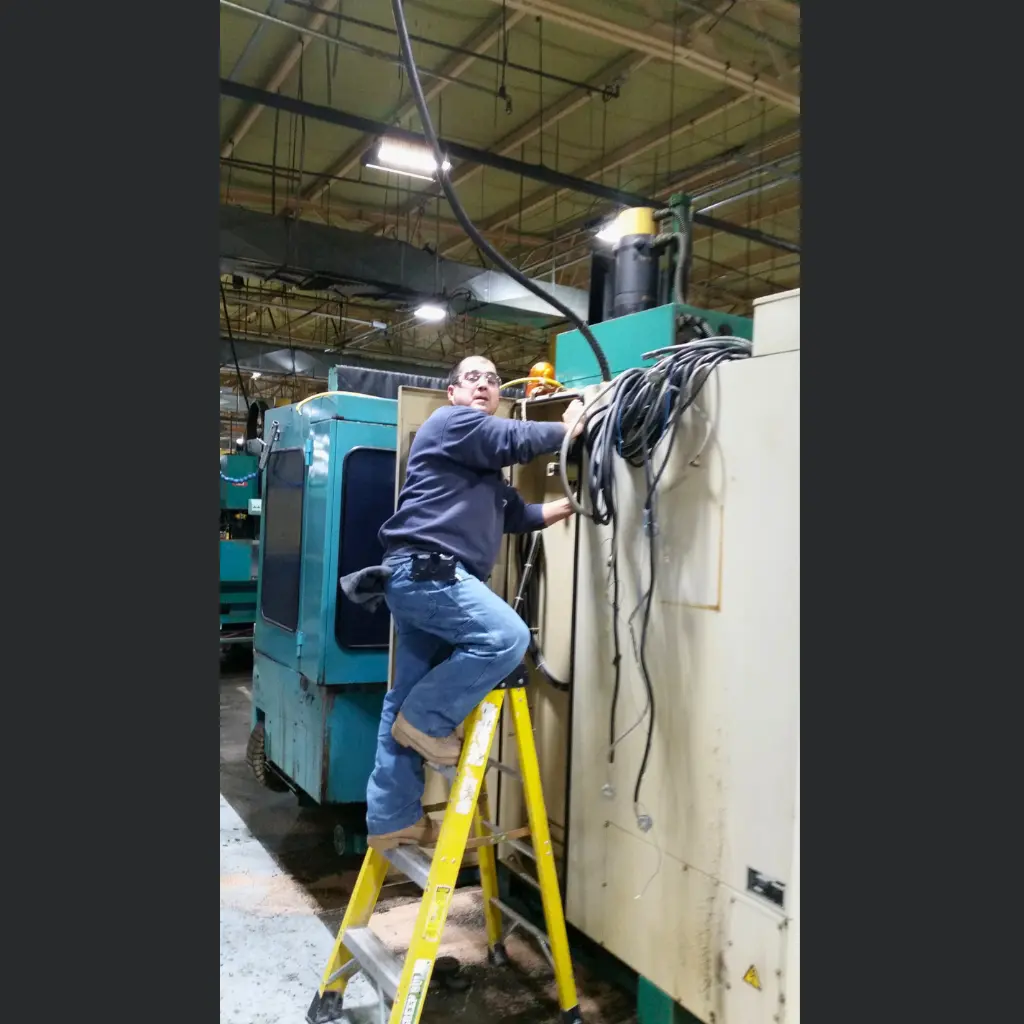
Wiring a piece of shop or production equipment is its own specialty within industrial work. That includes running power to a new machine, wiring into its control cabinet, connecting motor circuits, and making sure the disconnects and dedicated circuits are set up correctly for that specific piece of equipment. It’s also common when equipment gets relocated within a shop or brought in from somewhere else and needs to be reconnected to match the building’s electrical system.
Control cabinets like these carry the wiring that actually runs the machine, not just the power feeding it, so the work has to be done carefully and tested before the equipment goes back into service.
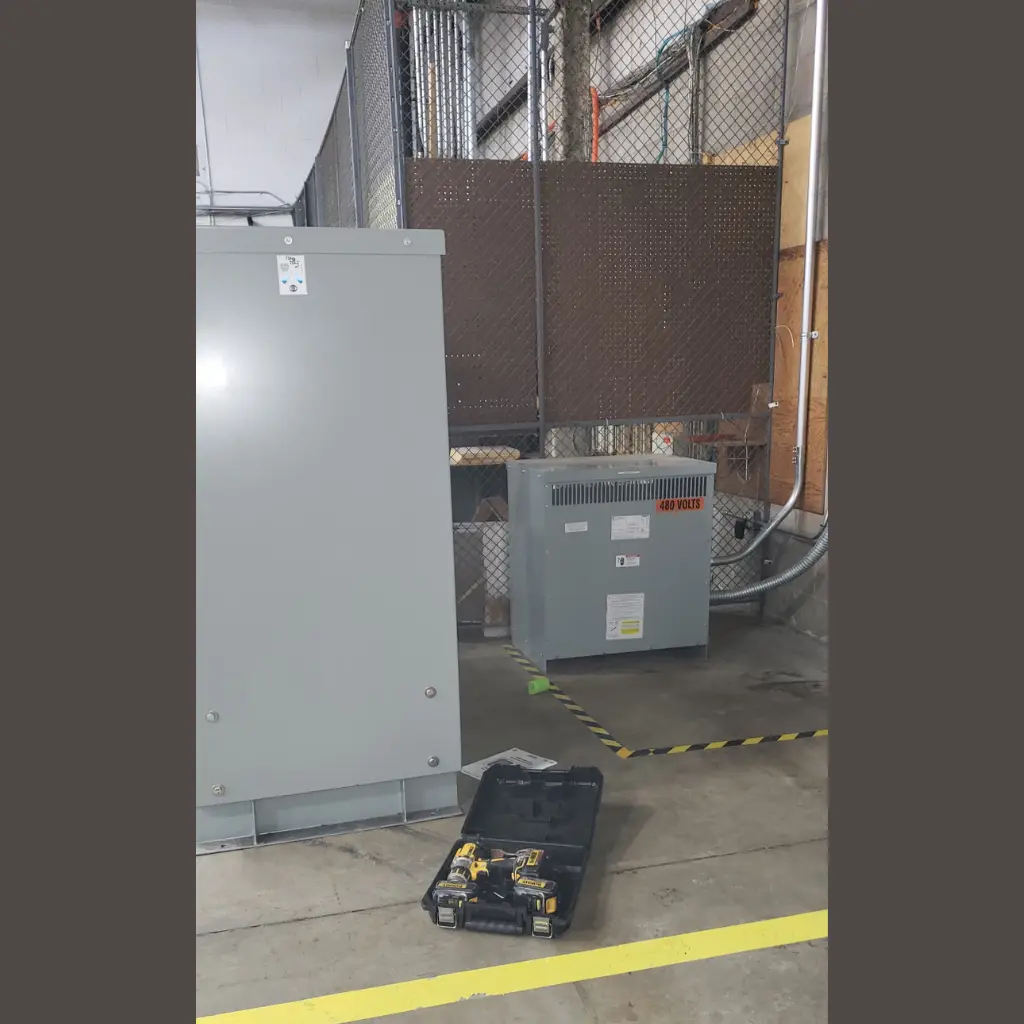
Power & Control
the cabinet wiring runs the machine, not just the feed to it — tested before it goes back into service
03
Warehouse Lighting and Controls
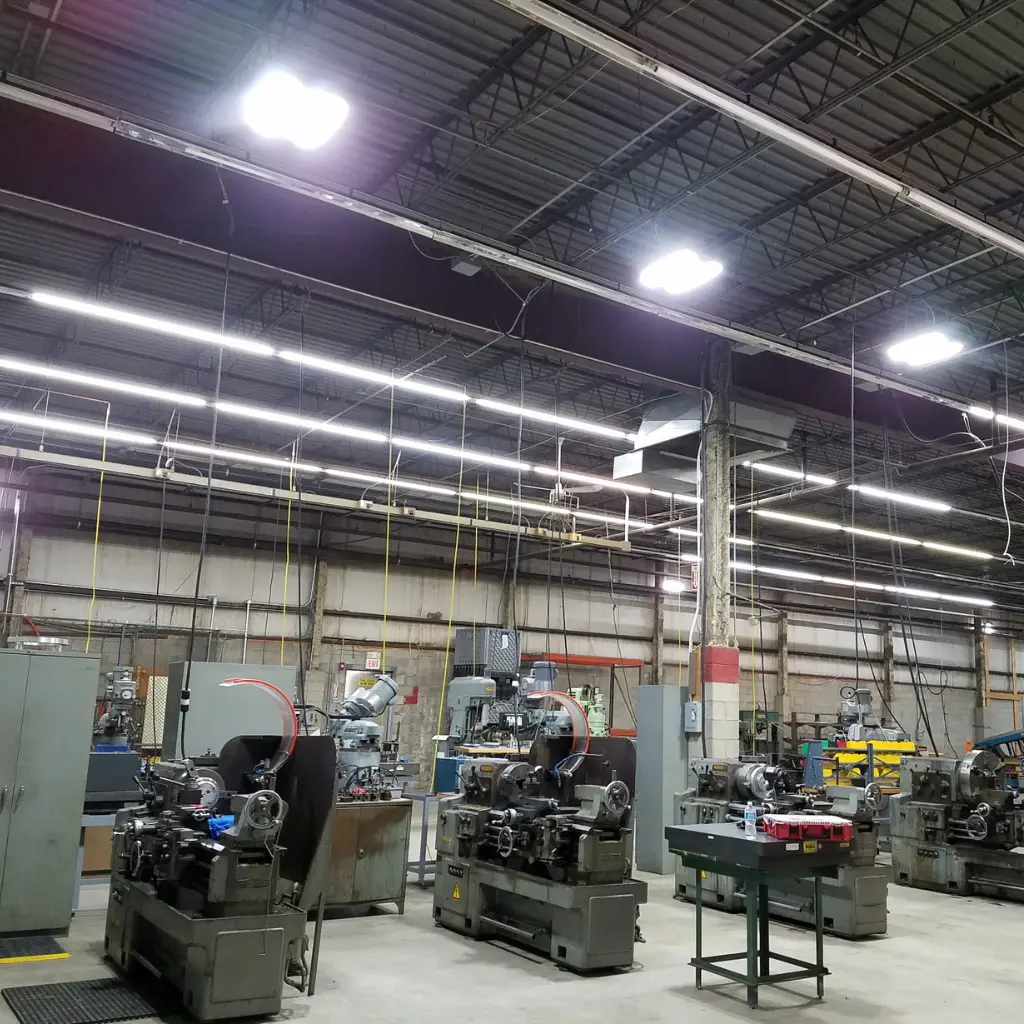
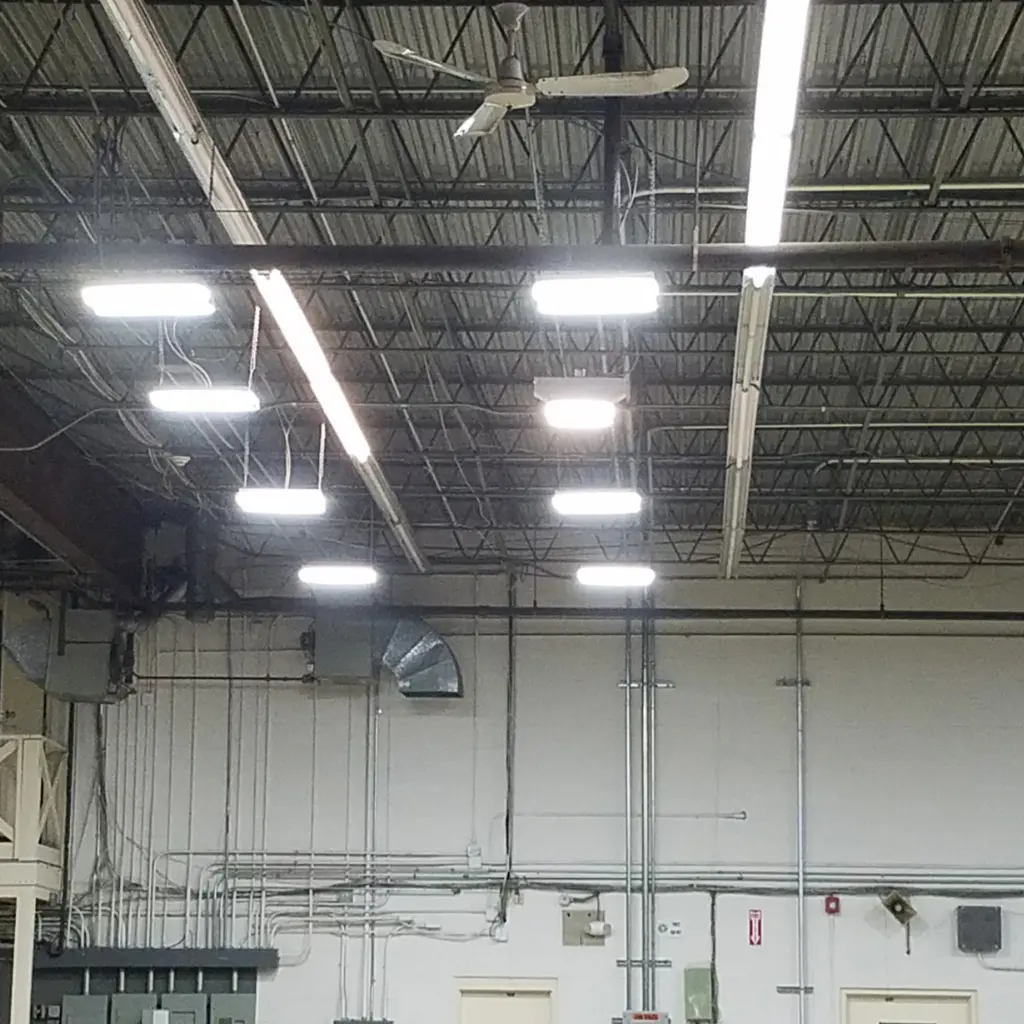
Warehouse and shop lighting has different demands than office lighting: higher ceilings, equipment underneath that needs good visibility, and fixtures that have to hold up in a working environment. A lot of the warehouse and shop spaces I work in still have older fluorescent fixtures overhead, and upgrading to LED high-bay lighting is one of the more straightforward ways to improve visibility on the floor while cutting down on energy use and bulb replacements.
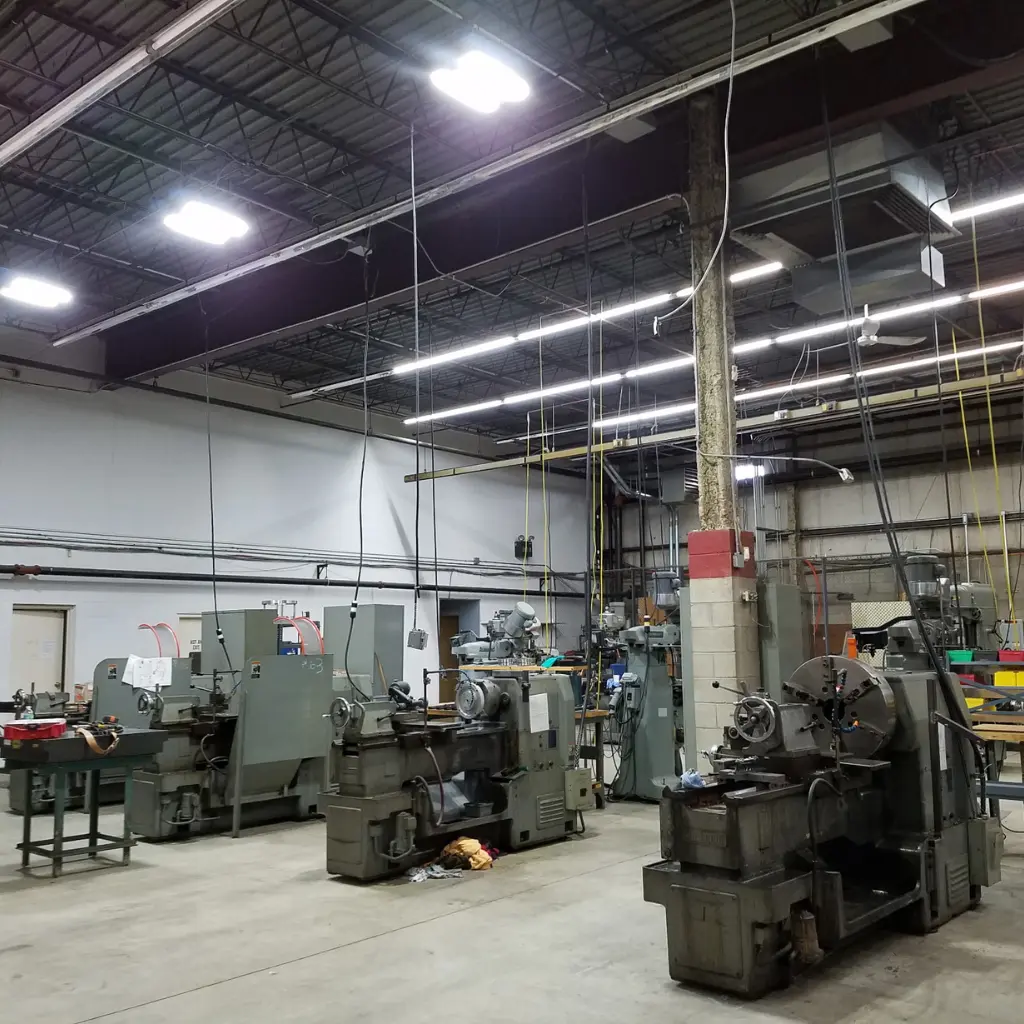
High-bay LED
office, retail, and restaurant build-outs each need a different electrical approach
04
Panels, Distribution, and Service Upgrades
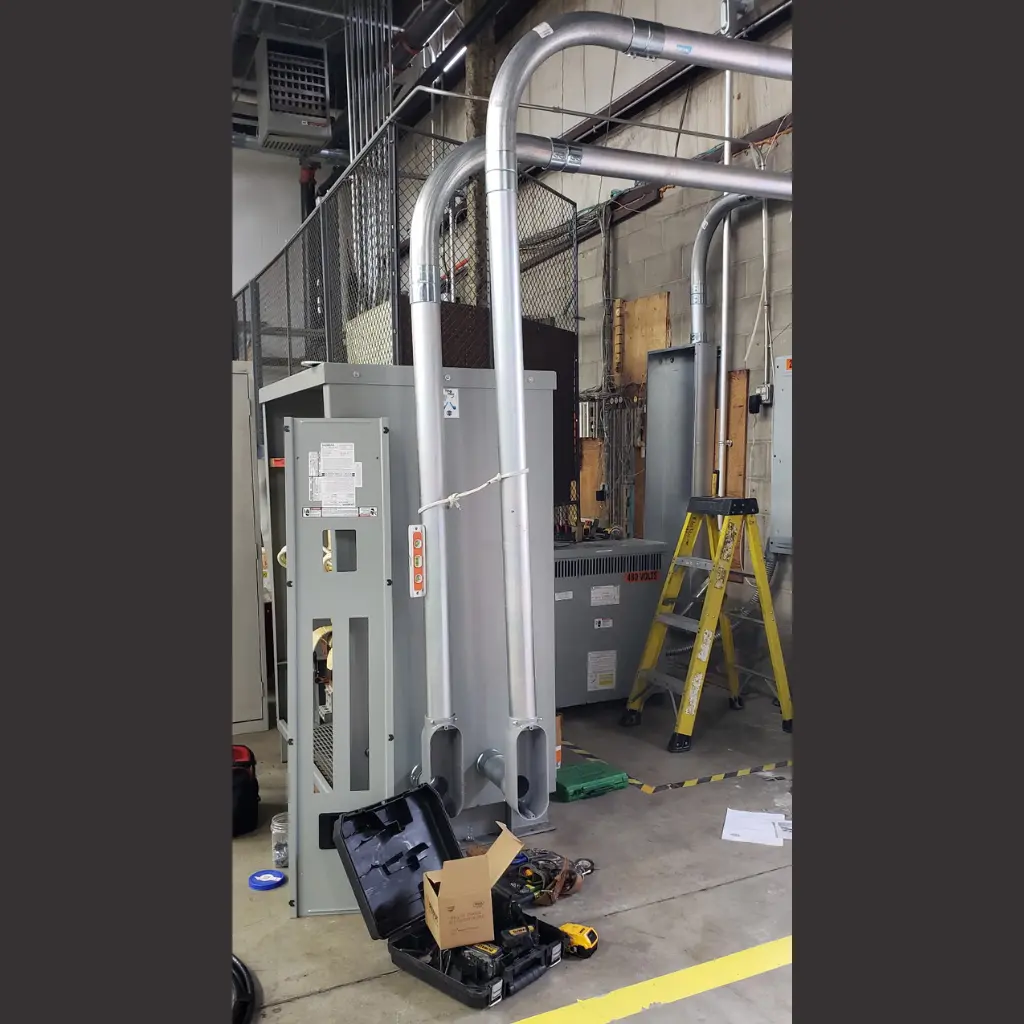
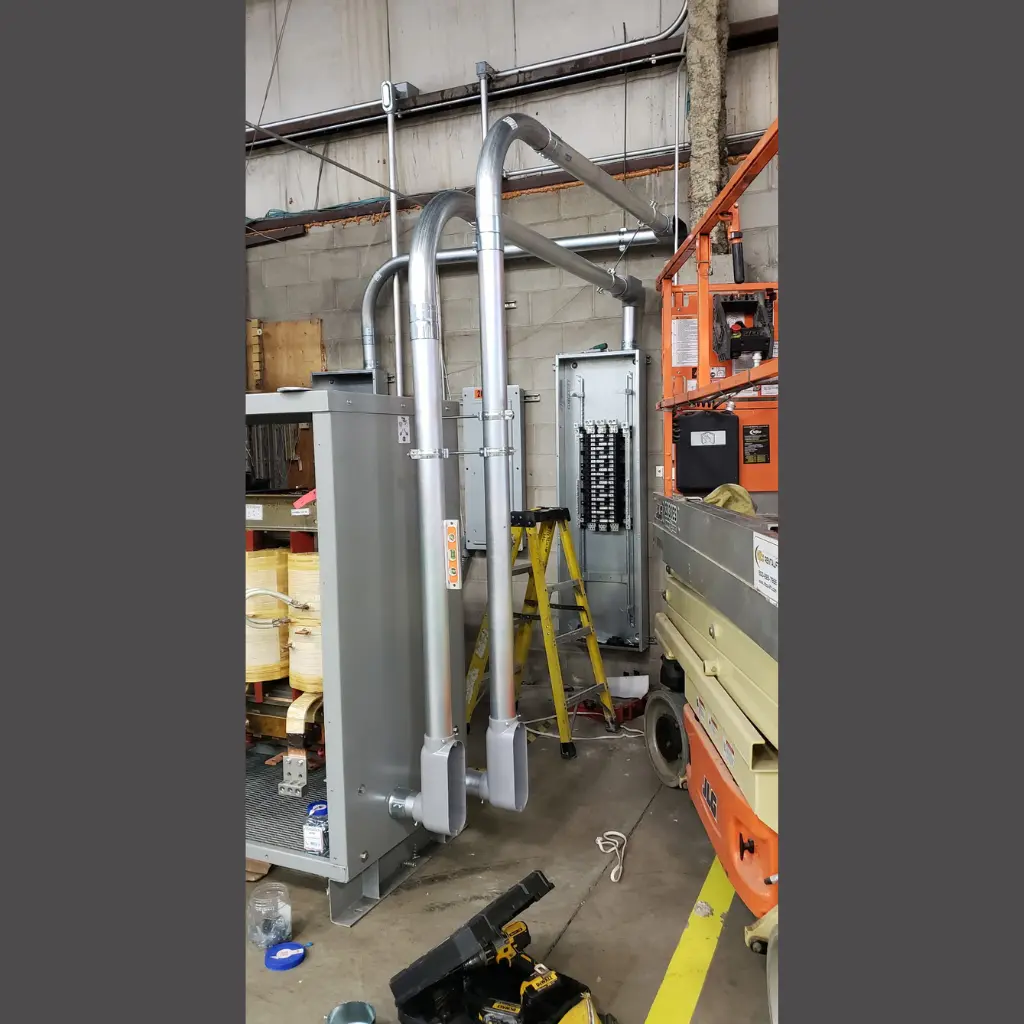
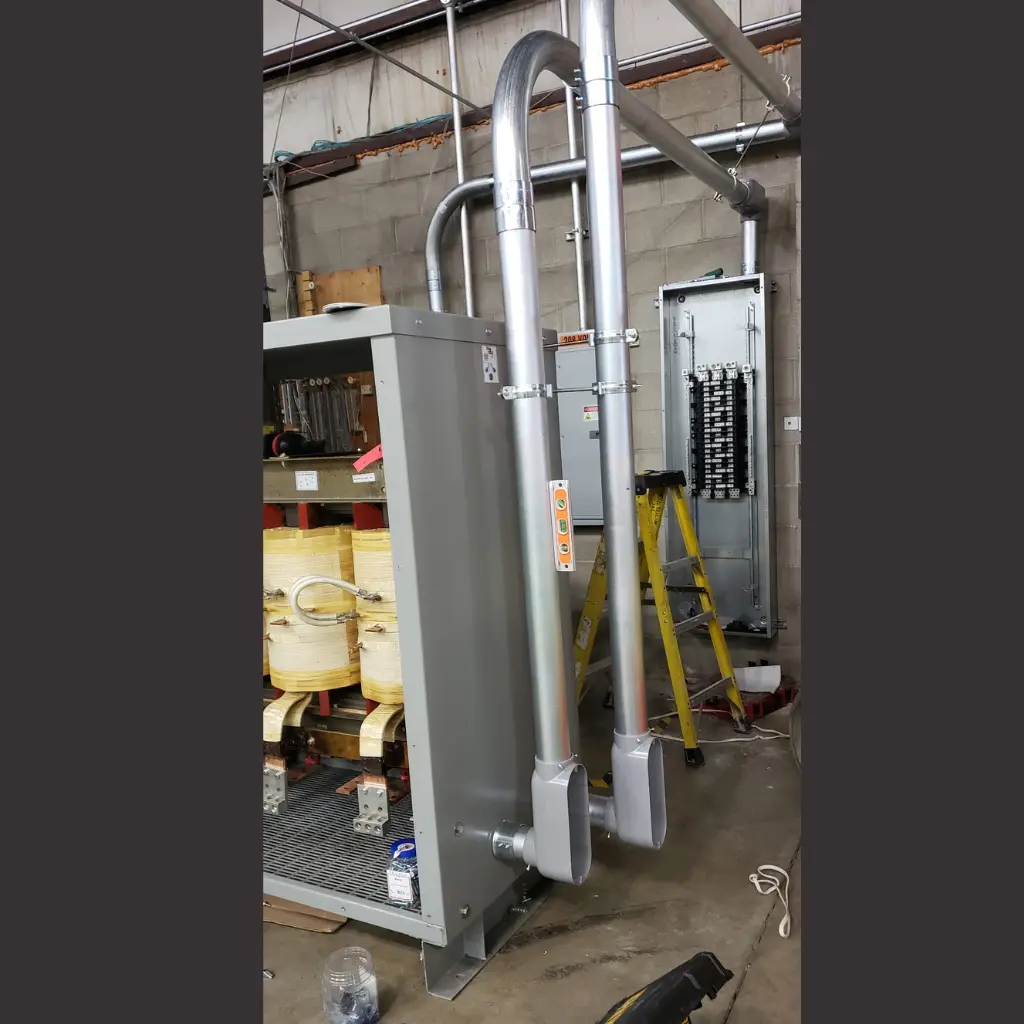
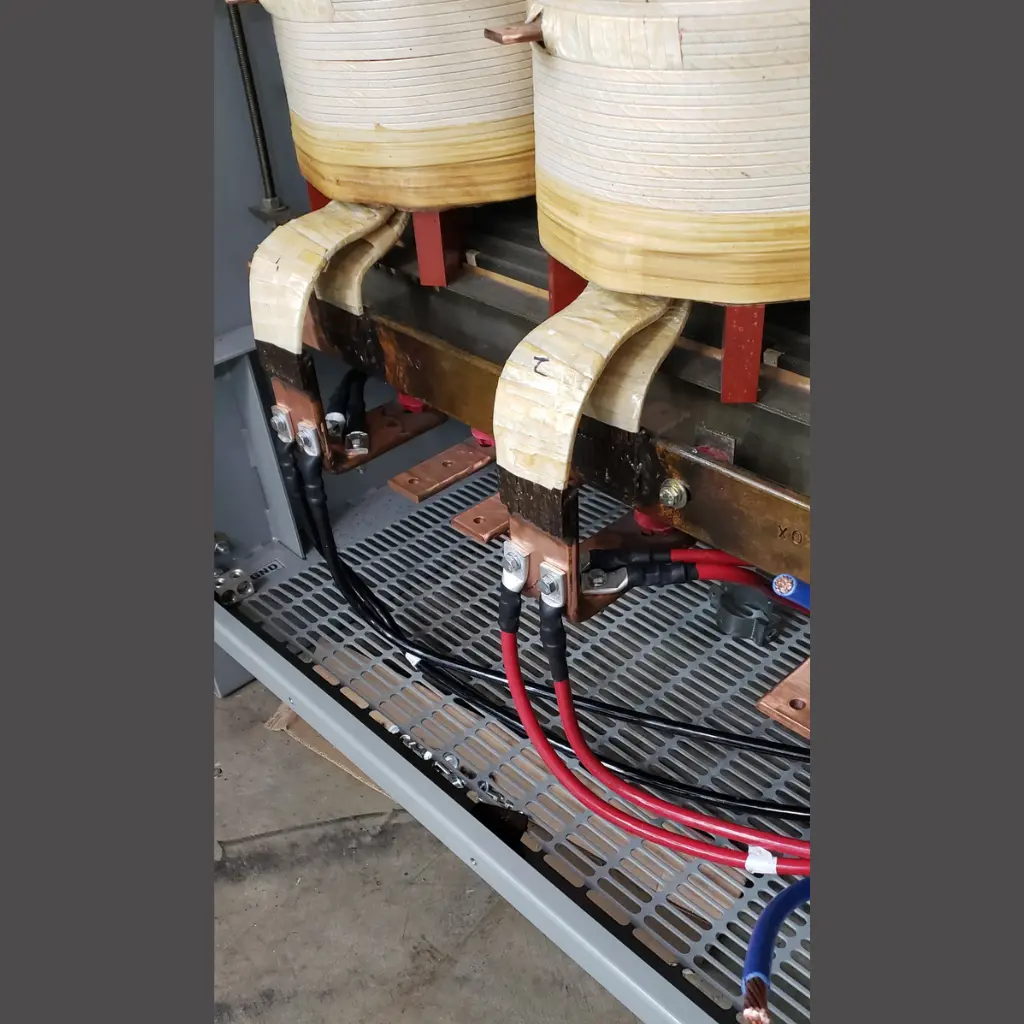
Warehouses and light industrial spaces often need more electrical capacity than the building originally had, whether that’s a new panel, additional distribution, or a transformer to step power down to what the equipment on the floor actually needs.
Work like this means running new feeders, landing conductors correctly at the transformer and panel, and making sure the whole system is set up to handle the building’s actual load, not just patched together to get by.
05
Troubleshooting, Repairs, and Preventive Maintenance
Downtime on a shop floor costs money, so troubleshooting an electrical issue quickly matters. That includes tracking down a tripped breaker or a machine that’s lost power, and catching smaller issues during routine maintenance before they turn into an unplanned shutdown.
A dedicated compressed air system is a good example of what this looks like in practice: the compressor needs its own circuit, sized correctly, with a disconnect installed where it’s actually needed, not just wherever the nearest outlet happens to be.
Downtime
is the real cost on a shop floor, which is why small issues get caught during maintenance
06
What Affects the Cost of Warehouse and Light Industrial Wiring
There’s no flat rate for this kind of work because the job depends on a handful of variables:
Equipment and load requirements, including whether you need new three-phase circuits or additional capacity
Panel and distribution scope, including whether a new panel, subpanel, or transformer is involved
Building conditions, including the age and layout of the existing electrical system
Lighting scope, if the job includes a warehouse lighting upgrade alongside other work
I give free estimates and walk through all of this with you before any work starts, so you know what’s driving the cost of your specific job.
07
Electrical Challenges in Lowell’s Older Industrial Buildings
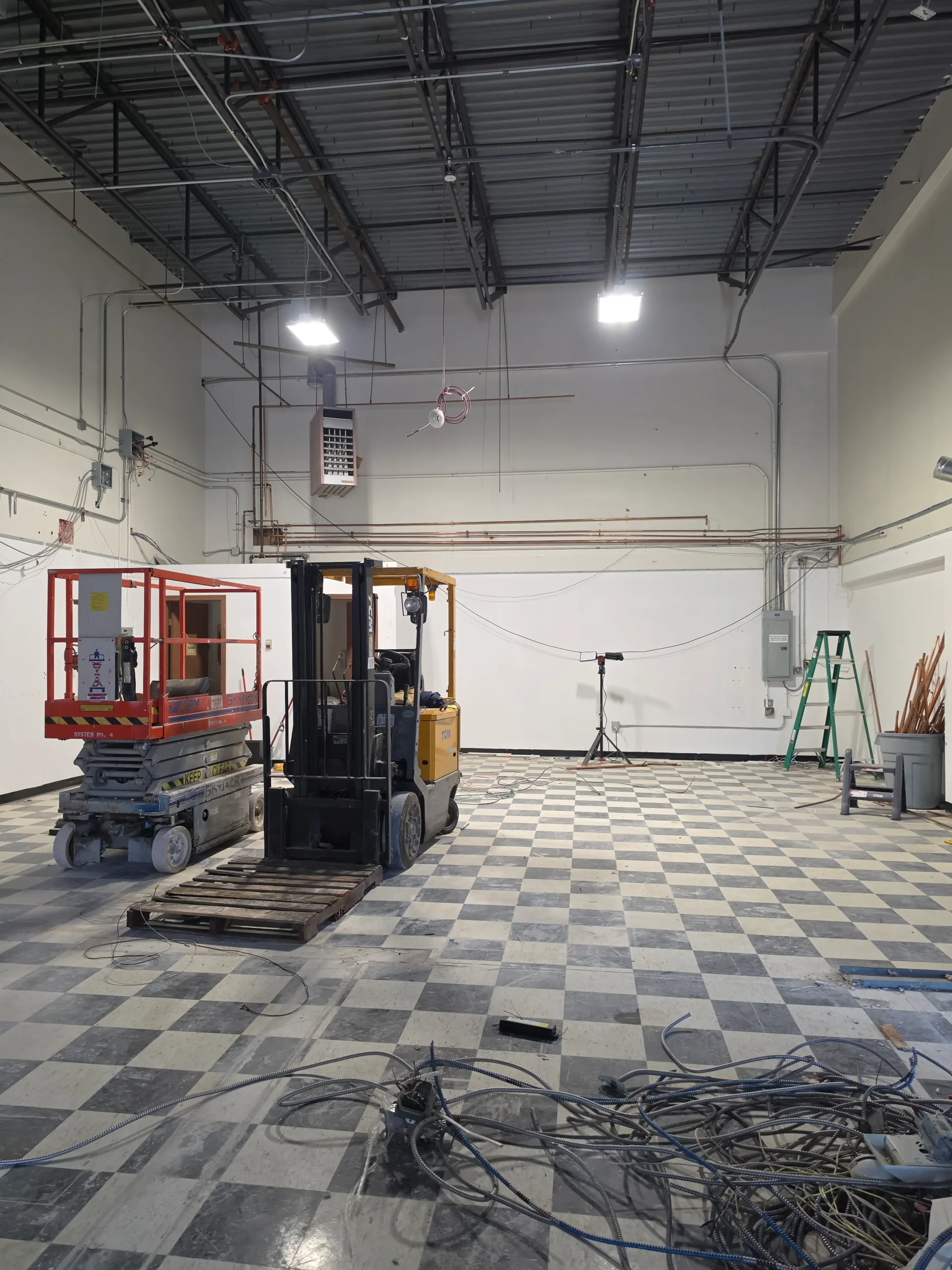
A lot of Lowell’s warehouse and light industrial space isn’t in brand-new construction, it’s in older mill buildings converted over the years for modern use. Those buildings have real character, but the electrical systems inside are often a mix of original wiring, later patches, and layouts that don’t necessarily match what a modern shop needs. The age of the building, the condition of the service entrance, and whether the existing conduit is even still usable all affect how a job gets planned, and none of that is safe to assume without actually opening things up and looking.
New England weather adds its own strain. Cold snaps can make older breakers trip more often, especially on equipment starting up in an unheated bay, and summer humidity and heat can push a panel that’s already running close to capacity. Walking through a Lowell space for an estimate means looking at all of it together: the building’s construction, how it’s heated and cooled, and where the electrical system is most likely to show stress as the seasons change.
08
How the Industrial Wiring Process Works
I start with a walkthrough of your space to understand what’s already there, what equipment needs power, and where the building’s electrical system might be a limiting factor. In an older building, that often means opening up panels and tracing conduit before I can tell you exactly what’s involved.
From there, I put together a quote covering the scope, whether that’s new circuits, a panel or distribution upgrade, or a lighting retrofit. Once you’re ready, I do the work in a way that keeps disruption to your operation manageable, and I test everything before calling the job done, including verifying that equipment circuits and disconnects are functioning the way they should.
01
Walkthrough of the space
02
Panels opened, conduit traced
03
Quote covering full scope
04
Work staged around your operation
05
Circuits and disconnects verified
09
Seasonal Considerations for Industrial and Warehouse Electrical Work
Lowell’s cold winters and humid summers put real, uneven stress on industrial electrical systems. In winter, equipment starting up cold in an unheated bay can trip older breakers more often than it would in a conditioned space. In summer, heat and humidity add load to panels that may already be running near capacity, and humidity speeds up corrosion on older connections and terminations over time.
Spring and early fall tend to be good windows for panel work, lighting retrofits, or other upgrades, since the building isn’t under the added stress of extreme heat or cold while the work is happening. That said, if equipment is having problems now, that’s not something to wait on regardless of season.
Permits & the MA Electrical Code
Industrial and warehouse electrical work is subject to the 2026 NEC (527 CMR 12.00), effective for permits granted after April 24, 2026. Permits for this kind of work go through the City of Lowell’s Division of Development Services, 375 Merrimack Street, Room 55. I’ll tell you upfront whether your project needs a permit and handle the paperwork if it does. Fees are set by the city and published on its Electrical Permit Fees page.
What I Handle
Pulling the electrical permit
Scheduling the inspection
2026 NEC and MA code compliance
Corrections, if an inspector flags anything
Why Lowell Businesses Choose Julio for Industrial and Warehouse Work
Licensed since 2004. MA License #10489-B, over 20 years of hands-on electrical work.
You deal directly with Julio. I oversee every job personally, from assessment to final testing.
Extra hands when scope demands it. A trusted helper comes on for larger jobs so the schedule holds.
Three-phase equipment work is routine. Machine circuits, disconnects, and distribution sized for the actual load.
Experience in Lowell’s older mill and industrial buildings. Including how their historic district status can affect certain exterior or structural work.
General liability insurance. On every job, in writing, before work starts.
24/7 emergency availability. A business can’t afford to wait on an electrical problem, and neither do I.
5.0-star rating on Google. Reviews from homeowners and business owners in the area.
Free estimates, no obligation. After an assessment, so the number is real. Se habla Español.
Ready to get your electrical warehouse work done? Send a quick message and I’ll follow up directly.
Industrial & Warehouse Electrical FAQ
What’s the difference between an industrial electrician and a commercial electrician?
The work overlaps, but industrial and warehouse jobs usually involve three-phase power, equipment-specific circuits, and higher electrical loads than a typical office or retail space. A commercial electrician’s day-to-day work leans more toward offices, retail, and general business spaces.
Can you upgrade the electrical panel in a warehouse or shop?
Yes. Panel and distribution upgrades are common in warehouse and light industrial spaces, especially when equipment needs more capacity than the building originally had.
Do you work on three-phase equipment?
Yes, three-phase circuits for machinery and shop equipment are a regular part of this work, including sizing and installing the right disconnect for each piece of equipment.
Do you wire new machines or just fix existing wiring?
Both. That includes wiring power and control connections for new equipment coming into a shop, reconnecting machinery that’s been relocated, and repairing or troubleshooting wiring on equipment that’s already in place.
What determines the cost of wiring a piece of equipment?
It depends on the equipment’s complexity, voltage and power requirements, how much control wiring is involved, and how far the circuit has to run from the panel. I give free estimates so you know what’s driving the cost for your specific machine.
What size warehouse or shop can you take on?
This is light industrial and small-to-mid warehouse work, sized for what I can properly oversee as a solo or two-person crew. Larger heavy-industrial projects are outside that scope.
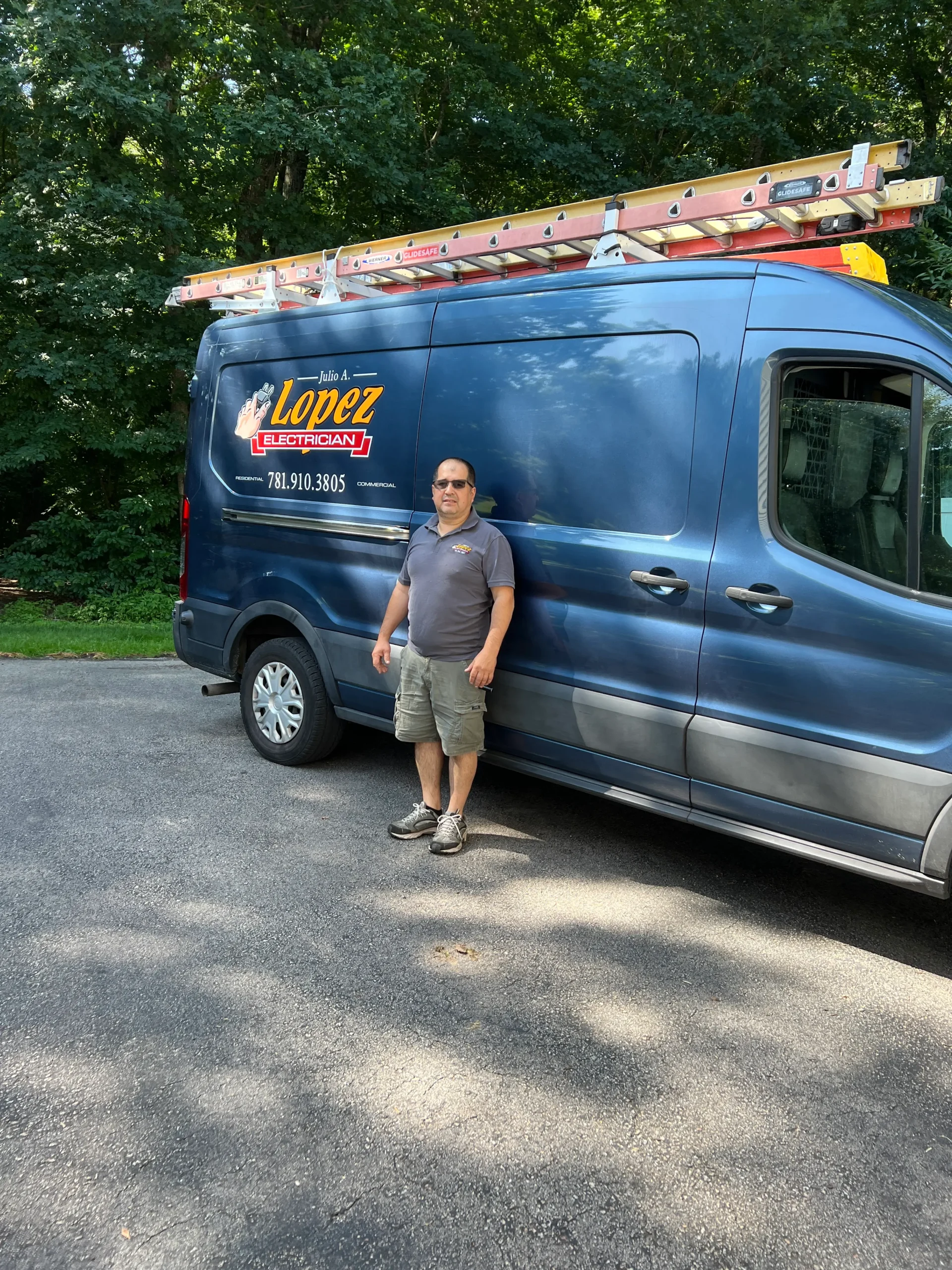
About Julio Lopez, Licensed Lowell Electrician Since 2004
I’ve been doing this work since 2004. You deal with me directly from the estimate through the final inspection, and on larger installs I bring on a helper so the job keeps moving.
I keep things straightforward: I’ll tell you what needs doing, why, and what it costs before I start. I’m based right here in Lowell.
Read More About My BackgroundLicensed Electrician MA #10489-B
Fully Insured
LICENSE #10489-B
MA Electrician – Licensed since 2004
Rated 5.0+ on Google
Lowell and Merrimack Valley Businesses We Serve
I take on warehouse and light industrial electrical work throughout Lowell, including the Acre, Centralville, and downtown, and across the Merrimack Valley towns like Chelmsford, Dracut, Tewksbury, and Tyngsborough. See the full list on my service areas page.
What Lowell Businesses Say About Julio

Get Your Industrial or Warehouse Project Started
Call 781-910-3805 to talk through your space, or send a few details and I’ll get back to you.