
Residential / Surge Protection
Whole-House Surge Protection
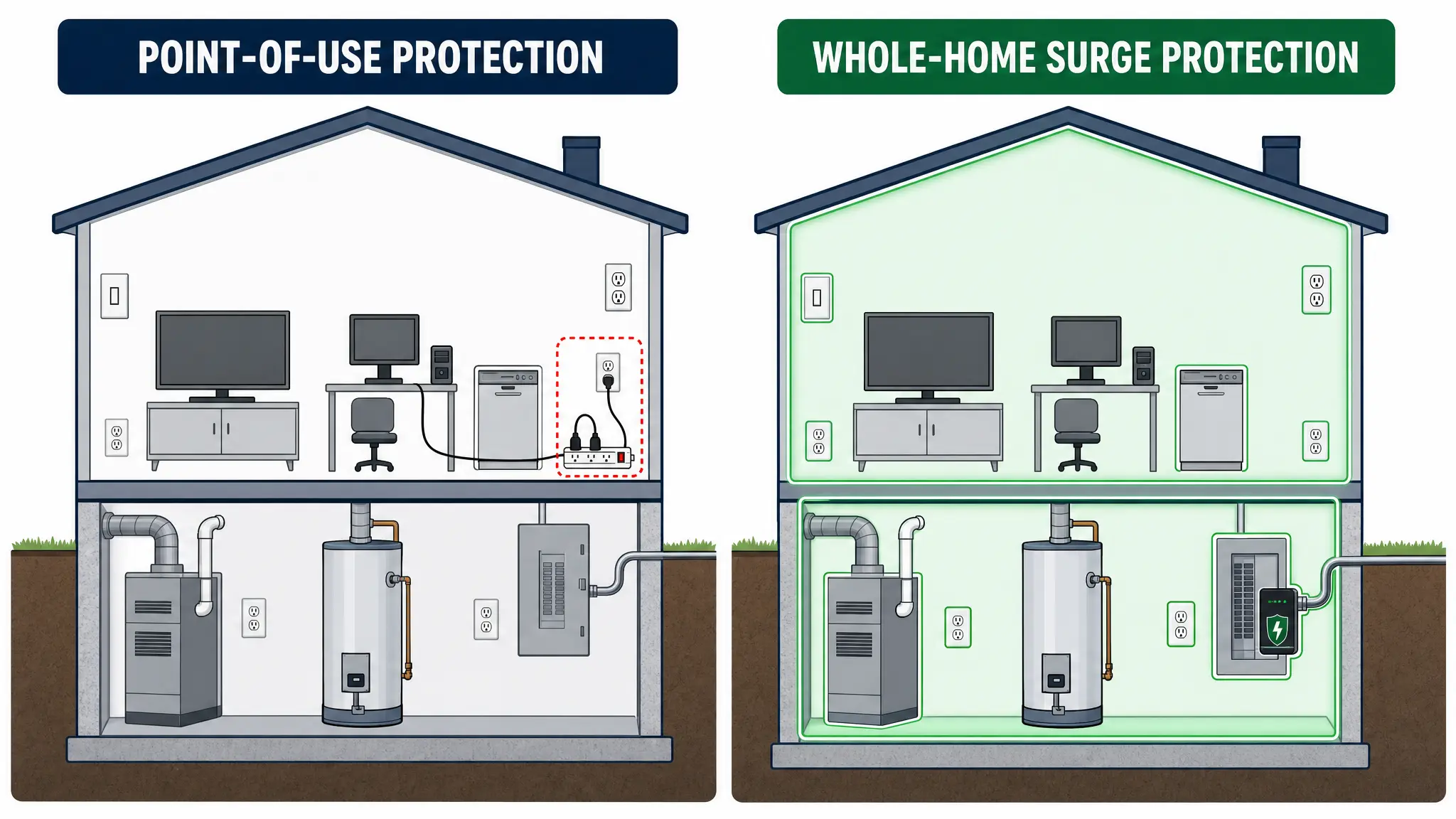
A power strip protects whatever is plugged into it. Whole-house surge protection protects everything else too, the furnace, the dishwasher, the wiring itself. I handle whole house surge protector installation for homeowners across Lowell Merrimack Valley as part of my residential electrical services.
What Whole-House Surge Protection Covers
A whole-house surge protective device mounts at your main panel and protects your entire electrical system in one shot, outlets, switches, and anything hardwired that you can’t just unplug and run through a power strip. This page covers installing that panel-mounted protection for your home.
What that install looks like depends on what’s already there, older mill-era Lowell homes sometimes still have Federal Pacific or Zinsco panels, which have a documented history of complaints worth a closer look, while newer builds around here more often run Square D or Eaton equipment. Either way, surge protection needs to match the panel it’s going into.
Whole House Surge Protection vs. Plug-In Surge Protectors
A plug-in surge protector only protects what’s plugged directly into it, and plenty of what’s sold as surge protection in a power strip doesn’t actually do much suppression at all. Whole-house protection covers your entire system, including the outlets, switches, and hardwired appliances a plug-in device can never reach, and it holds up to larger surges for longer.
One honest limitation worth knowing: no surge protector, whole-house or otherwise, can stop a direct lightning strike. What it does is dramatically reduce the everyday risk, the surges from grid switching, storms nearby, and your own appliances cycling on and off, which is where most of the real damage actually comes from.
Where Do Surges Actually Come From?
Surge protection isn’t a nice-to-have anymore. Whole-home surge protective devices have been required by the National Electrical Code since the 2020 edition for dwellings, which tells you where the people who write electrical safety standards land on how necessary this actually is.
Massachusetts has since moved on to the 2026 NEC (CMR 12.00) as its current adopted code, and that requirement carried forward. If your home was built or your panel was replaced under current code, surge protection is expected to be part of it.
2020
NEC edition that first required whole-home SPDs
Is Whole House Surge Protection Worth It?
For most homes, yes. It’s a one-time install that protects everything hardwired in your house, the furnace, the water heater, a heat pump, appliances you can’t just unplug and run through a power strip. Given how much modern homes rely on expensive, hardwired equipment, the cost of protecting it is small compared to the cost of replacing it after a surge.
Do You Need an Electrician to Install a Whole House Surge Protector?
Yes. It installs directly at your main panel, which means working with live electrical service. Beyond the legal requirement in Massachusetts, it’s also where sizing and compatibility with your specific panel matter, get it wrong and the protection isn’t doing what you think it’s doing.
Whole-House Protection vs. Power Strips
Power strips only protect what’s plugged directly into them, and plenty of the surge protection sold as power strips doesn’t actually do much surge suppression at all. Whole-house protection covers your entire system, including the outlets, switches, and hardwired appliances that a power strip can never reach, and it holds up to larger surges for longer than a point-of-use device.
One honest limitation worth knowing: no surge protector, whole-house or otherwise, can handle a direct lightning strike. What it does is dramatically reduce the everyday risk, the surges from grid switching, storms nearby, and your own appliances cycling on and off, which is where most of the real damage actually comes from. That matters more here during nor’easter season, when grid switching events tend to spike, and in homes that lean on heat pumps and other hardwired HVAC equipment for New England winters, since that’s exactly the kind of expensive, hardwired system a power strip can’t touch.
Why This Isn’t Just an Upgrade Anymore
Lightning gets the headlines, but a lot of surges start inside the house. An HVAC system kicking on, a refrigerator compressor cycling, anything with a motor starting up, all of it creates small voltage spikes that add up over time.
In Lowell’s older homes, aluminum wiring from the 1960s and 70s adds another variable, since aging or degraded wiring is more prone to the kind of faults that create surges in the first place, especially in pre-1940s mill-era neighborhoods like Belvidere that still carry a lot of original electrical infrastructure. Whole-house protection catches both the big external events and the smaller ones your own house generates.
1960s
era of aluminum wiring still found in older Lowell homes
Local Permits & Building Codes in Lowell, MA
Whole-house surge protection installs at your main panel, so it needs an electrical permit from the city’s Division of Development Services (375 Merrimack Street, Room 55, Lowell, MA 01852). I pull it for you, no running around City Hall on your own. Current fee details are posted on the city’s Electrical Permit Fees page.
All work follows the 2026 Massachusetts Electrical Code (CMR 12.00), which is the NEC with state amendments. Only a Massachusetts-licensed electrician can pull the permit and do the work. I schedule the inspection, meet the inspector, and hand you the signed-off paperwork.
2026
MA electrical code got new ammendments
Why Lowell Homeowners Choose Julio?
Licensed since 2004. MA License #10489-B.
You deal with me, not a dispatcher. I work solo, so the person who quotes the job is the person who does it.
24/7 emergency availability. Electrical problems don’t wait for business hours, and neither do I.
I install to current code, not the bare minimum. Surge protection done right protects the whole system, not just what’s plugged in.
5.0 star rating on Google. People tend to mention the same things: on time, honest, cleans up after himself.
General liability insurance. Covered, in writing, before I touch a panel.
Free estimates. No pressure, no obligation.
Se Habla Español.
More about Julio Lopez, Licensed Lowell Electrician Since 2004
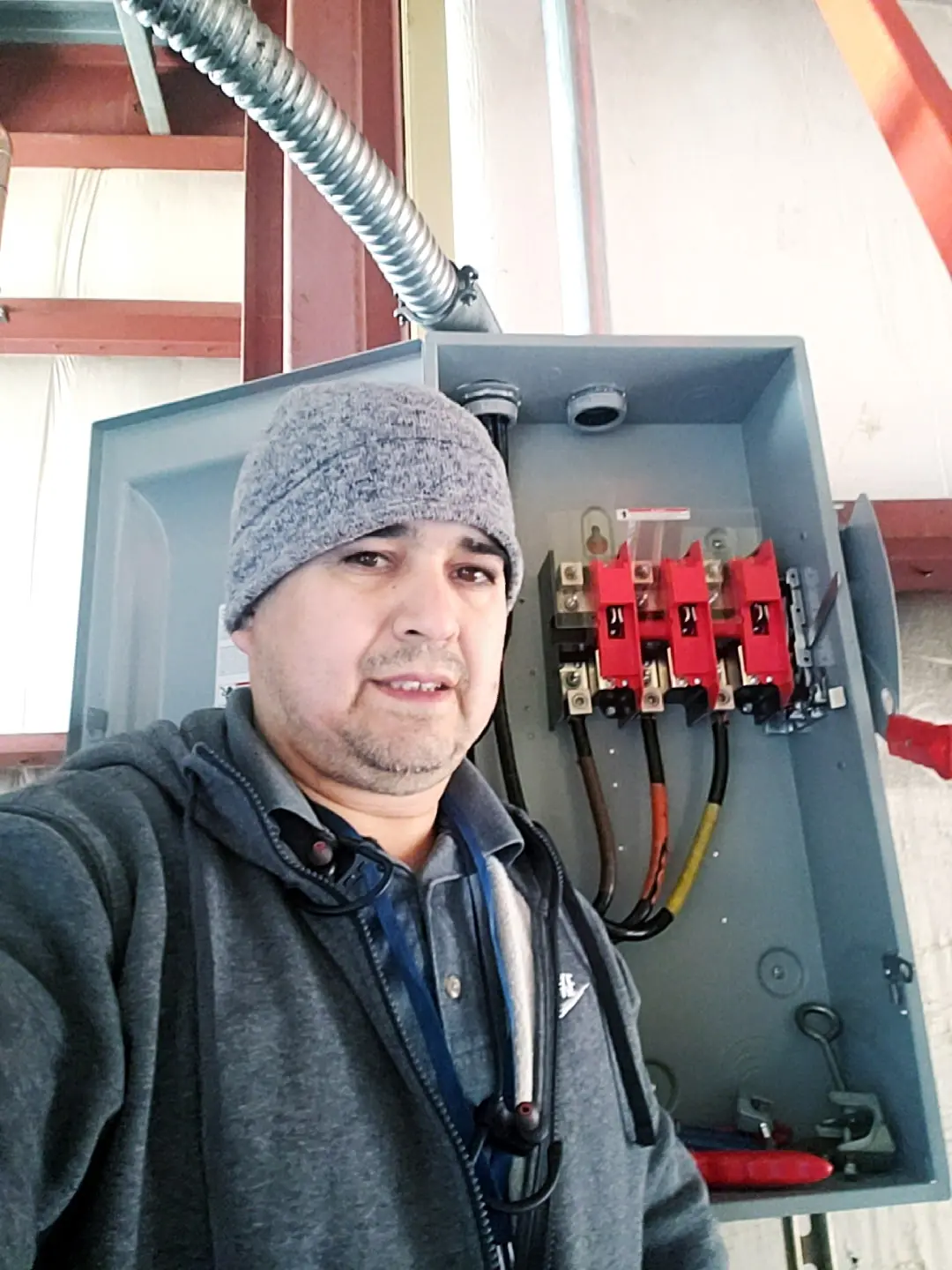
I’ve been doing this work since 2004, mostly on my own, which means less time explaining things to a stranger in a truck and more time actually getting the job done. I keep things straightforward: I’ll tell you what needs doing, why, and what it costs before I start. I’m based right here in Lowell. Read more about my background.
LICENSE #10489-B
MA Electrician – Licensed since 2004
Rated 5.0+ on Google
Lowell Neighborhoods and Merrimack Valley Towns We Serve
I cover Lowell, including neighborhoods like Belvidere, Pawtucketville, and Centralville, plus the surrounding Merrimack Valley towns such as Dracut and the rest of the service area.
Whole-House Surge Protection FAQ
Isn’t a Power Strip Enough Surge Protection?
No. A power strip only protects what’s plugged directly into it. Whole-house protection covers your entire electrical system, including outlets, switches, and hardwired appliances like your furnace or dishwasher that a power strip can’t reach.
Can Whole-House Surge Protection Stop a Direct Lightning Strike?
No surge protector can fully stop a direct lightning strike. What it does is dramatically reduce the everyday risk from grid switching, nearby storms, and surges generated by your own appliances, which account for a lot of the damage that actually happens.
Does Massachusetts Require Whole-House Surge Protection?
Whole-house surge protective devices have been required by the National Electrical Code since the 2020 edition for dwellings, and Massachusetts’s current adopted code, the 2026 NEC (CMR 12.00), carries that requirement forward. If your Lowell home had a panel replaced under current code, an SPD should be part of it.
Will Surge Protection Work With My Existing Panel?
In most cases, yes. Whole-house surge protective devices install into your existing panel. If your panel is older or already at capacity, I’ll flag that during the estimate.
How Long Does Whole-House Surge Protection Installation Take?
Most installations take one to two hours. If your panel needs prep work or has capacity issues, it can run longer, and I’ll let you know before any work starts.
Which Lowell Neighborhoods Do You Install Surge Protection In?
I install whole-house surge protection throughout Lowell, including Belvidere, Pawtucketville, and Centralville, plus surrounding Merrimack Valley towns like Dracut and the rest of the service area.
Will a Whole-House SPD Protect My HVAC or Heat Pump?
Yes. That’s actually one of the main reasons homeowners install one. Furnaces, heat pumps, and central AC systems are hardwired, expensive to repair, and can’t be protected by a plug-in strip. A panel-mounted SPD covers all of it.
Do Surge Protectors Need to Be Replaced After a Big Surge?
Sometimes. Quality whole-house SPDs have indicator lights showing whether the device is still active. After a significant event, it’s worth checking, and I can inspect and replace the module if it’s spent.
Do I Need a Permit for Surge Protection Installation?
Yes, in most cases. I handle that paperwork as part of the job.
What Lowell Homeowners Say About Julio

Ready to Protect Your Whole Home?
Whether it’s a new build or an older panel, I’ll install surge protection that covers your whole system, not just what’s plugged in. Serving Lowell, Dracut, and the rest of the Merrimack Valley.