
Commercial / Surge Protection
Commercial Surge Protection Installation in Lowell, MA
A power surge can take out expensive equipment in an instant, whether it’s a server, a point-of-sale system, or an HVAC control board. I install commercial surge protection for offices, restaurants, and small businesses across Lowell and the Merrimack Valley, so a bad surge doesn’t turn into a bad week. It’s one of the commercial electrical services I handle end to end.
What Commercial Surge Protection Covers
Commercial surge protection means installing a surge protective device, or SPD, to guard your building’s electrical system against transient voltage spikes. Surges can come from outside sources like lightning or utility switching, or from inside your own building, like equipment cycling on and off.
An SPD is typically installed at your electrical panel or service entrance, where it can catch a surge before it reaches the outlets and equipment downstream. For businesses with sensitive electronics, servers, or specialized equipment, that protection matters more than it might seem on a normal day.
This matters in older commercial buildings too, including the converted mill spaces common around Lowell, where the original electrical service was never designed with today’s equipment loads or surge risks in mind. Related commercial work:
01
Do Commercial Buildings Need Surge Protection?
It depends on the type of building. The National Electrical Code requires surge protection on services supplying dwelling units, along with a handful of specific occupancy types like dormitories, hotel and motel guest rooms, and nursing home patient sleeping rooms. A standalone office, retail store, or restaurant generally isn’t covered by that blanket requirement under the current code.
That doesn’t mean surge protection isn’t worth having. Plenty of businesses install it anyway to protect equipment that would be expensive or disruptive to replace, especially anything with sensitive electronics. If your building includes residential-type occupancies, like apartments above a storefront, which is common in downtown Lowell’s mixed-use buildings, the code requirement may apply to the residential portion of the service even if the ground-floor commercial space wouldn’t trigger it on its own. I can tell you exactly where your project stands once I know your building type and scope.
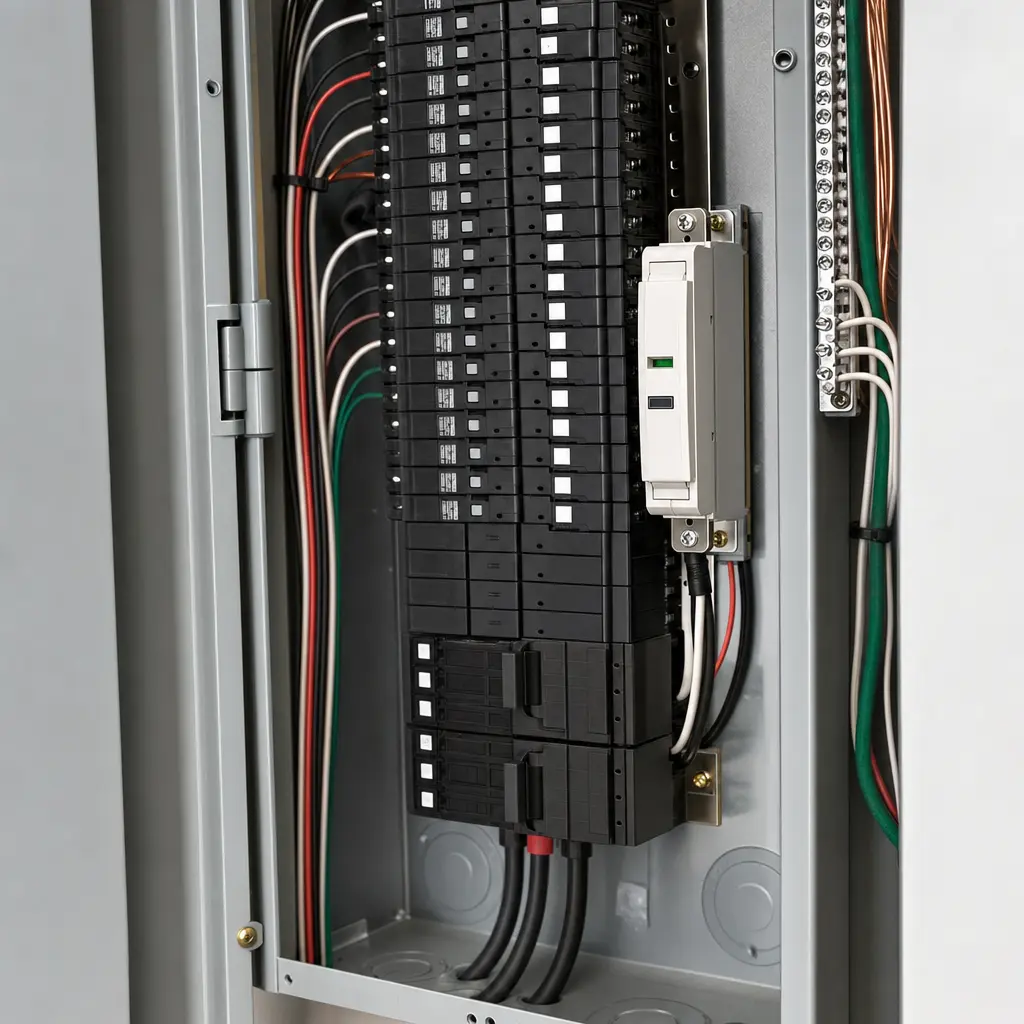
Section 230.67
the NEC’s surge protection requirement covers dwelling units and related occupancies, not standalone commercial buildings
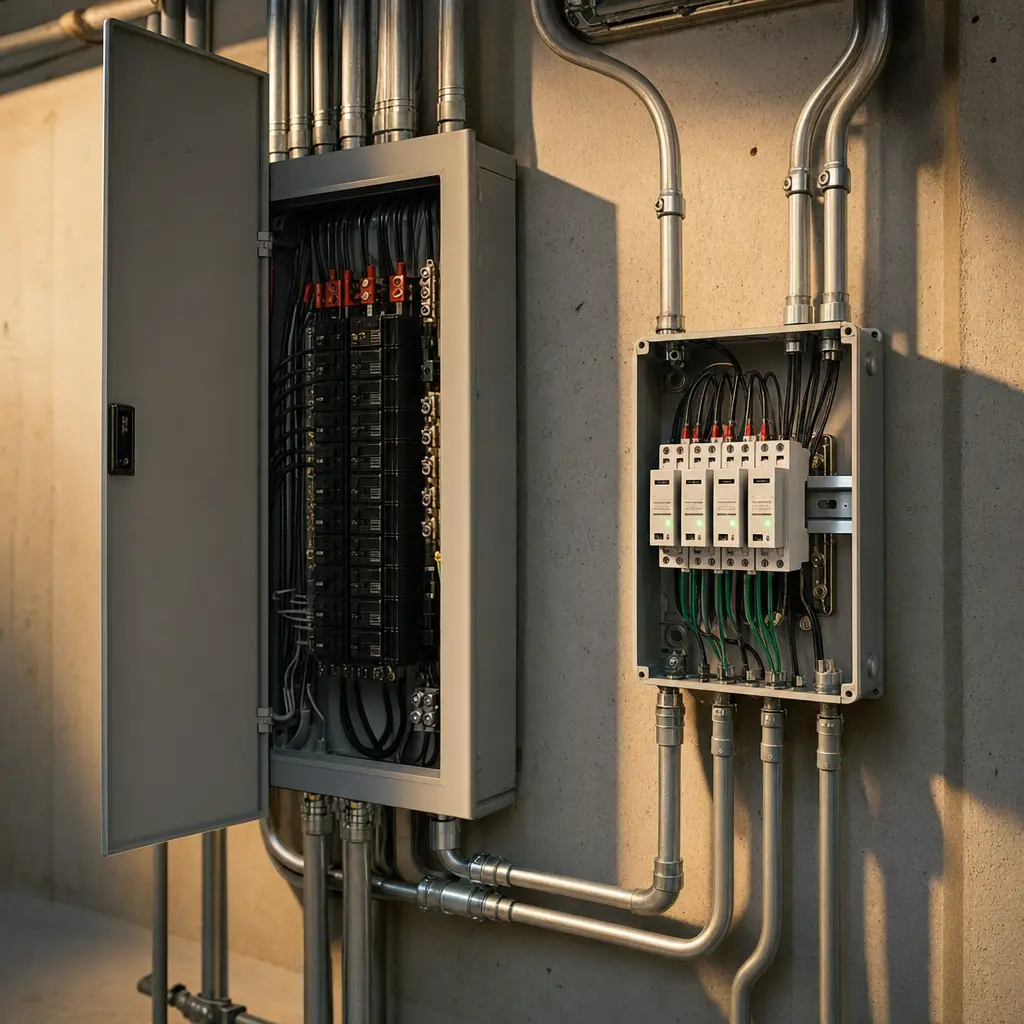
Panel first
office, retail, and restaurant build-outs each need a different electrical approach
02
Surge Protection for Lowell’s Older Commercial Buildings
A lot of Lowell’s commercial buildings started out as something else: textile mills, warehouses, storefronts built before World War II. Many of those buildings still run on electrical services that were never designed for today’s equipment loads, let alone the kind of voltage spikes that come from a utility switching event or a summer thunderstorm.
Adding a surge protective device to a building like that isn’t always a simple bolt-on job. Sometimes the panel needs work first, or the grounding has to be brought up to current code before an SPD can actually do its job. That’s part of what I look for when I assess a building in the Acre, Centralville, downtown near the canals, or anywhere else in Lowell with older commercial stock. The goal isn’t just installing a part, it’s making sure the whole setup is ready to protect what you’re actually trying to protect.
03
How the Surge Protection Process Works
I start by assessing your building’s electrical service: what type of panel you have, whether you’re single-phase or 3-phase, and whether the grounding meets current code. In older buildings, that assessment is what tells me whether an SPD can go in as-is or whether the panel or grounding needs work first.
From there, I put together a quote covering the device, any prep work, and installation. Once you’re ready, I install the SPD, verify the grounding and connections, and test the system before I call the job done. I’ll walk you through what was installed and what it protects before I leave.
01
Service and panel assessment
02
Grounding check
03
Quote with device and prep work
04
SPD installation
05
Testing and walkthrough
04
Seasonal Considerations for Surge Protection
Lowell’s climate runs the full range: humid summers with regular thunderstorms, and cold, snowy winters. Annual precipitation for the area is typically cited somewhere in the high 40s to around 50 inches depending on the source, and summer thunderstorms are usually the biggest surge risk, though winter ice storms and heating systems cycling on and off add stress too. Humidity also speeds up corrosion on older connections, which is something I check for during installation.
Spring (March through May) and early fall (September and October) tend to be good windows for scheduling this kind of work, ahead of thunderstorm season or after it, and before winter freeze-ups. That said, if you need protection installed now because of an immediate concern, I won’t turn that into a reason to wait.
05
Types of Surge Protection: SPDs, Panel-Level, and 3-Phase
Surge protective devices come in different types depending on where they sit in your electrical system. A Type 1 SPD is installed ahead of the main disconnect, closer to the utility connection. A Type 2 SPD is installed at the panel, after the main disconnect, which is the more common setup for most commercial buildings.
Larger commercial buildings often run 3-phase power, which needs an SPD rated for that kind of system rather than a standard single-phase device. Whole-building protection at the main panel is the most common approach, though additional protection can be added closer to sensitive equipment for an extra layer of coverage.
06
What Affects the Cost of Commercial Surge Protection
There’s no flat rate for surge protection because the job depends on a few variables:
Building size and service type, including whether you’re running single-phase or 3-phase power
SPD type, Type 1 versus Type 2, and the specific device rating needed
Panel condition and access, since older panels sometimes need additional work to accommodate an SPD
Scope of coverage, whether you’re protecting the whole building or adding protection closer to specific equipment
I give free estimates and walk through all of this with you before any work starts, so you know what’s driving the cost of your specific job.
Permits & the MA Electrical Code
Surge protection installation is subject to the 2026 NEC (527 CMR 12.00), effective for permits granted after April 24, 2026. Under Section 230.67, the code requires SPDs on services supplying dwelling units and a specific set of related occupancy types, such as dormitories, hotel and motel guest rooms, and nursing home patient sleeping rooms. It does not currently impose a blanket surge protection requirement on standalone commercial buildings.
Permits for electrical work like this go through the City of Lowell’s Division of Development Services, 375 Merrimack Street, Room 55. I’ll tell you upfront whether your specific project requires a permit and handle the paperwork if it does. Fees are set by the city and published on its Electrical Permit Fees page.
What I Handle
Telling you upfront if a permit applies
Pulling it and scheduling inspection
NEC 230.67 and MA code compliance
Grounding verification and testing
Why Lowell Businesses Choose Julio for Surge Protection
Licensed since 2004. MA License #10489-B, over 20 years of hands-on electrical work.
You deal directly with Julio. One accountable point of contact from assessment to installation.
Extra hands when scope demands it. A helper comes on for multi-port jobs, and I’m still accountable for the work.
Straight answer on whether you need it. The code requirement is narrow, and I’ll tell you where your building actually stands.
Familiar with Lowell’s older commercial stock. Mills, warehouses, and pre-war storefronts, where grounding often needs a look first.
General liability insurance. On every job, in writing, before work starts.
24/7 emergency availability. A business can’t afford to wait on an electrical problem, and neither do I.
5.0-star rating on Google. Reviews from homeowners and business owners in the area.
Free estimates, no obligation. After an assessment, so the number is real. Se habla Español.
Ready to get your surge protection installed? Send a quick message and I’ll follow up directly.
Commercial Surge Protection FAQ
Is surge protection legally required for commercial buildings in Lowell, MA?
Not generally. The NEC requires it for dwelling units and specific occupancies like dormitories, hotels, and nursing home patient sleeping rooms. Standalone offices, retail stores, and restaurants aren’t covered by that blanket requirement, but many Lowell businesses install surge protection anyway to protect expensive equipment.
What does commercial surge protection installation cost in Lowell?
It depends on building size, service type (single-phase or 3-phase), SPD type and rating, and panel condition. I give free estimates after assessing your specific setup, so you know exactly what’s driving the cost.
What are the downsides of using surge protectors?
An SPD isn’t a one-time investment with no upkeep. Devices can degrade after absorbing a significant surge and need to be inspected or replaced over time. They also don’t protect against every type of electrical event, so they’re one part of a building’s overall electrical safety, not a total guarantee.
How long does a surge protective device last in a commercial building?
It varies, especially after a device absorbs a major surge. I recommend periodic inspections, and I can check the SPD during routine electrical maintenance to see if it needs replacing.
What’s the difference between a Type 1 and Type 2 surge protector?
A Type 1 SPD is installed ahead of the main disconnect, closer to the utility connection. A Type 2 SPD is installed at the panel, after the main disconnect, which is the more common setup for commercial buildings.
Do you handle permits for surge protection work in Lowell?
Yes. Permits for electrical work go through the City of Lowell’s Division of Development Services at 375 Merrimack Street. I’ll tell you upfront if your project needs one and handle the paperwork.
Can you install surge protection in older Lowell buildings with outdated panels?
Yes. Many of Lowell’s commercial buildings were built decades ago and may need panel upgrades or grounding improvements before an SPD can go in. I’ll assess your panel and explain any necessary prep work.
What are your hours for commercial surge protection work?
Monday through Friday, 7:30 AM to 5:30 PM, and Saturdays 7:30 AM to 5:00 PM.
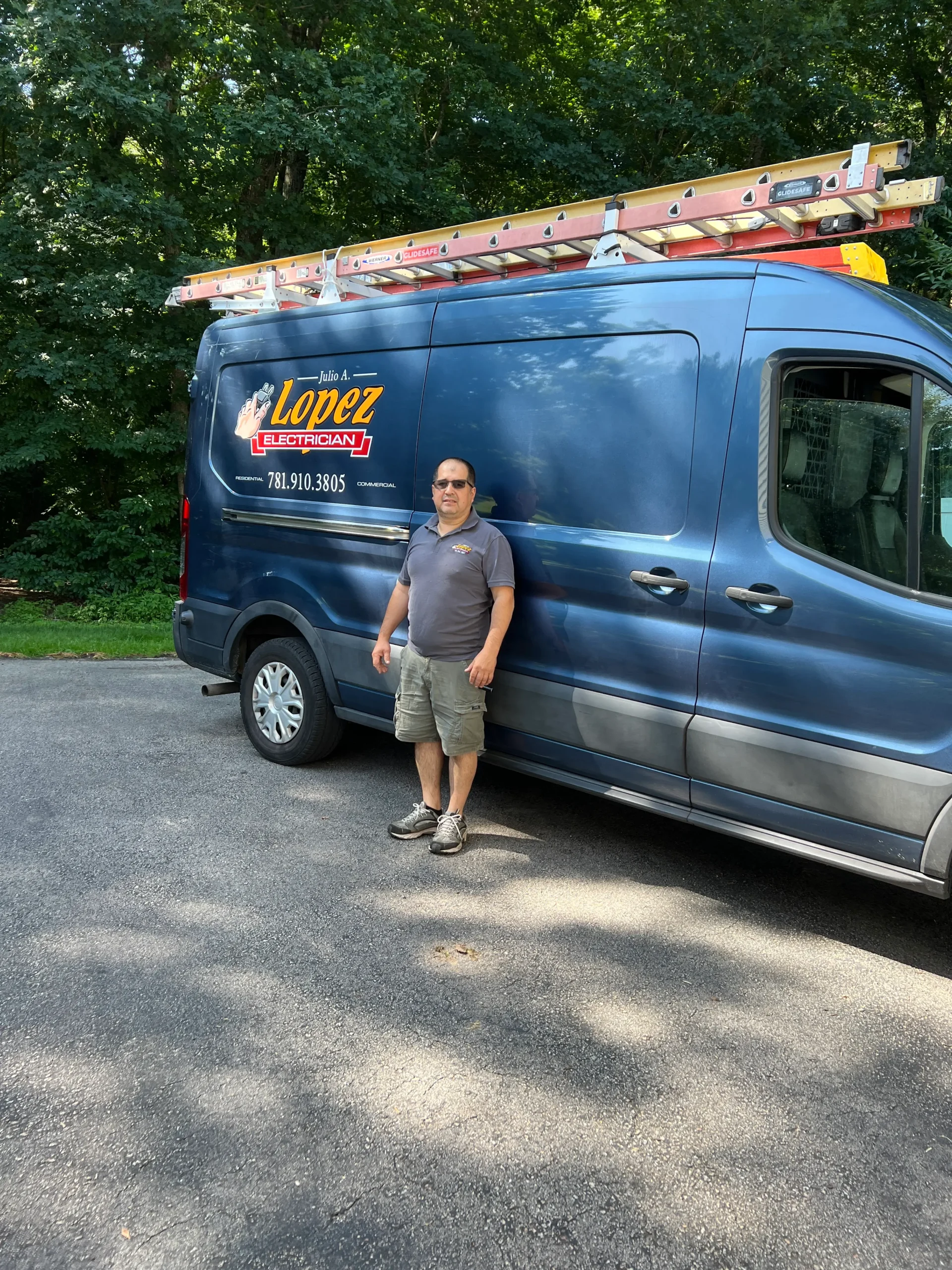
About Julio Lopez, Licensed Lowell Electrician Since 2004
I’ve been doing this work since 2004. You deal with me directly from the estimate through the final inspection, and on larger installs I bring on a helper so the job keeps moving.
I keep things straightforward: I’ll tell you what needs doing, why, and what it costs before I start. I’m based right here in Lowell.
Read More About My BackgroundLicensed Electrician MA #10489-B
Fully Insured
LICENSE #10489-B
MA Electrician – Licensed since 2004
Rated 5.0+ on Google
Lowell and Merrimack Valley Businesses We Serve
I install commercial surge protection throughout Lowell, including the Acre, Centralville, and downtown, and across the Merrimack Valley towns like Chelmsford, Dracut, Tewksbury, and Tyngsborough. See the full list on my service areas page.
What Lowell Businesses Say About Julio

Get Your Surge Protection Installed
Call 781-910-3805 to talk through your building’s protection needs, or send a few details through and I’ll get back to you.